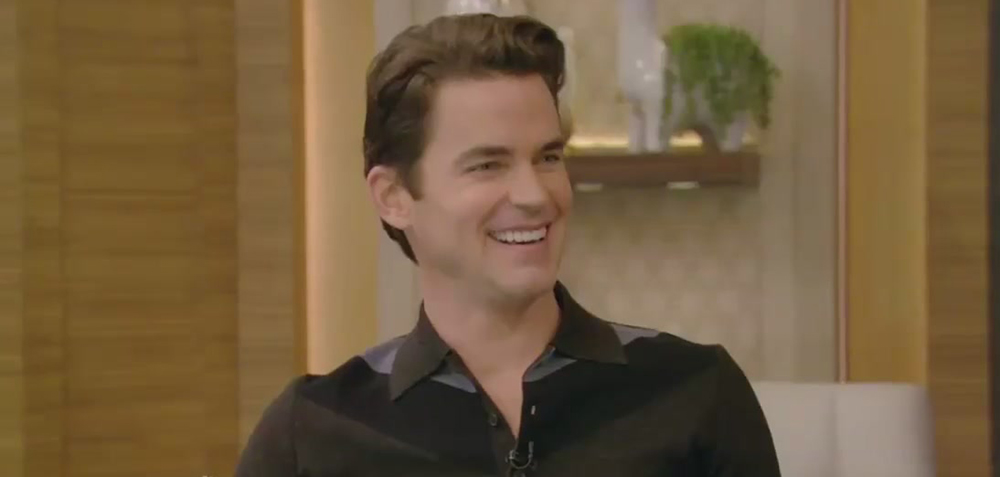
Hello, friends! Matt visited this morning the Live with Kelly and Ryan, to talk about The Last Tycoon, that’s starring this Friday!
Watch the full interview below:
[su_youtube url=”https://www.youtube.com/watch?v=ciIfDwJP3i4″ width=”700″]
Hello, friends! Matt visited this morning the Live with Kelly and Ryan, to talk about The Last Tycoon, that’s starring this Friday!
Watch the full interview below:
[su_youtube url=”https://www.youtube.com/watch?v=ciIfDwJP3i4″ width=”700″]

We’re just at 10 days away from The Last Tycoon premiere – it will premiere next July 28 on Amazon – and Matt will be making his rounds on TV shows to promote it. So, check your DVD-Rs:
Live with Kelly and Ryan – July 24
The Tonight Show Starring Jimmy Fallon – July 25
This post will be updated, if more appearances are confirmed.

Esquire has published a great interview with Matt, to promote The Last Tycoon. They’re also – in a huge agreement with the fanbase – talking about how Bomer is made for this role – “Though he’s still getting caught up on his old Hollywood history, Bomer is as debonair and tortured as the role requires“. Yeah, we all agree!
Check some excerpts of the great interview below:
So how did you get involved with The Last Tycoon, and what drew you to it?
Billy called me out of the blue in December. He brought the project up to me, and his vision for it. Like all of us, I was very familiar with Fitzgerald’s work, but it had been a while since I had read The Last Tycoon or seen the Kazan film. It sounded like the world he wanted to create, while a period piece, was very topical and interesting. I read the script, I thought it was fantastic, we sat down together, and that was that.Now you’ve played your fair share of rogues. You got famous playing a con man. Is it more fun to be a bit evil, or more pure good?
You know, I try not to think of it as black and white, because all human beings have a shadow. We all have a great deal of admirable qualities, and we all have some that could probably be improved upon. My favorite characters, when I read them, are people with some aspects of both—that feels more human and [like] the people I’ve encountered and my own experiences of life. I like it when they have a little bit of each.Now you filmed the pilot, and Amazon is waiting around to see what the reaction is, and then it will decide whether to order it to series or not, right?
Yeah. That’s the plan.How are you feeling? Is this a nerve-wracking way to work? Because all you can do is get the word out and hope people see it and like it.
You know, I try not to worry about it too much. Thankfully, I have a very full life. I’m married with kids, so I have a lot of things to focus on, other projects either in post-production or pre-production, so you just do the best you can. I love that Amazon has this diplomatic process where people’s voices can be heard, and they can weigh in. I think it’s a great way to use the interconnectedness we have with the Internet. At the same time, pilots are essentially rough drafts. It’s a bit like bringing all your friends into an ultrasound and saying, “Isn’t my baby beautiful?” You can make out the rough outlines and the edges and get a good sense of what the baby is going to look like, but you won’t know until you get a chance to flesh it out. I just hope people will visit the world and enjoy what they see. For me personally, I look at it and go, “Oh that’s great, that’s cool, that did not work, I can work on that,” and you soldier forward should you be given the opportunity.Are you resisting the urge to check in with your agent or whomever every day and go, “Okay, what are the numbers now? How about now?”
You know, I think for the first couple of days I did, and then I realized that’s just not a healthy endeavor. There’s an old saying: “There’s no sure formula for success, but the only certain formula for failure is to try to please everybody.” I think if you over-concern yourself with what people’s opinions are, I don’t think it’s really healthy for anybody. And certainly as an artist, you don’t want those voices in your head when you’re trying to make a choice for a character. You want to be operating from where you are in that space with the work you’ve done.I don’t know if this is true or not, but there’s a long-running rumor that if you work with George Clooney and get to know him even a little, he will send you a box of what he considers the 100 best movies of all time, and he expects you to watch them all.
I can imagine no more enjoyable assignment from a director. I would love that. As a matter of fact, if George Clooney ever reads this, I want those 100 movies regardless of whether or not we work together.
Read the full interview at Esquire website.

In another interview released today, Matt talked to OUT about straight roles, pride, & the greatness of Montgomery Clift.
The show displays a dark side of Hollywood. Is this a realistic view or is it more cynical?
I think Fitzgerald was never appreciated in his time the way we appreciate him now and I think his experience in Hollywood as a writer was probably a frustrating one in some regards. I don’t feel that. I feel it’s more realism, to be honest with you, and what’s shocking to me is how little has changed in some regards. What goes into the decision to cast a certain person or to make a certain movie or not make a certain movie because of what’s going on in society or politics and which markets you need to appeal to, those things are really relevant even today. I’ve seen them. I’ve been blessed by them and I’ve been a victim of them. To me, I don’t think it’s cynical. At the end of the day it’s called show business and people are going to look after that bottom line to cover their ass.
I feel like you’re casting a new mold as a leading man: you’re out and this is a straight role. How do you feel about that?
Look, first of all, I’m so grateful and inspired by people like Billy Ray and Amazon and Sony who are willing to choose the person they feel best suits the role regardless of what their personal life might be. They choose the artist they want to work with and those are the kinds of people in the business that I want to work with.
I try not to think about it, but you can’t help to not consider it and you can’t help but have it in the back of your head. For me, I tend to be so hard on myself as it is I put so much pressure on myself because I’m always thinking about the next generation and doing a job that will be suitable enough to make sure I’m not the last person who gets this great benefit of the times that we’re living in. Part of my job is just letting go of that and just focusing on the work and doing the best I can and not thinking of myself as anything different or other, just thinking of myself as an actor doing my job.
Last week on James Corden, you told a story about your son. Maybe it was because of Orlando, but I couldn’t help thinking how it’s as important as ever that LGBTQ+ people stay visible, even with a simple anecdote like that.
I just try to treat it as my life and my experience. I know James on a friendly basis. It’s never really been a special or delicate thing to talk about. He has kids so we talk about our lives when I see him and I think in terms of being who you are, it’s obviously a highly subjective matter. A lot of times people want other people to be out and marching in the parade, but sometimes there are things going on in people’s personal lives or interpersonal relationships with their immediate family that make those things very difficult. I think it is important to live your truth but it’s not my place to judge anybody for where they are in terms of finding that truth.
To read the full interview, go to OUT website.

A few days ago Buzzfeed published a Snapchat with Matt on their studios, and we was waiting for more videos and pictures. Today it was released a sort of a quizz on their website, alongside this cute video.
Also, pictures of the photoshoot he took that day is now in our gallery.


Matt is currently in London as part of The Nice Guys promotion tour. Last night he attended a special screening at the Empire Leicester Square.
(View another picture here and a small video here)
Earlier today, he did an interview to a local radio station, and posted about it on his twitter.
Great time chatting with the radio folks in London for @theniceguys!Thanks for having me. Opens June 3rd in the UK! pic.twitter.com/VNOkV8ooOf
— Matt Bomer (@MattBomer) May 18, 2016
Later he, Russell Crowe, Shane Black and Joel Silver attended a press conference to talk about the film. Check some videos below, plus some of his answer at the press conference by The Upcoming.
[nifty_accordions][nifty_accordion_panel title=”The Nice Guys UK Press Part 1″][su_youtube url=”https://www.youtube.com/watch?v=zuhW8Fi4l5M” width=”700″][/nifty_accordion_panel]
[nifty_accordion_panel title=”The Nice Guys UK Press Part 2″][su_youtube url=”https://www.youtube.com/watch?v=ugpPPhmmaq8″ width=”700″][/nifty_accordion_panel]
[nifty_accordion_panel title=”The Hollywood News”][su_youtube url=”https://www.youtube.com/watch?v=7GUny5C8eLg” width=”700″][/nifty_accordion_panel][nifty_accordion_panel title=”The Upcoming”][su_youtube url=”https://www.youtube.com/watch?v=LD0XenzR38k” width=”700″][/nifty_accordion_panel][nifty_accordion_panel title=”Flick and the City Plus”][su_youtube url=”https://www.youtube.com/watch?v=Qx-FM7vIaRQ” width=”700″][/nifty_accordion_panel][/nifty_accordions]
Matt, John Boy is terrifying without saying anything, just in his demeanour. Was that great to bring to life?
Matt Bomer: Oh yeah, I mean it is always fun to paint with different colours and play these kind of roles you aren’t typically thin-sliced as, and to do it with these people. I am essentially a fan boy who is lucky to be along for the ride. Shane and Joel are a huge part of my cinematic upbringing: to watch two of my favourite actors create this incredible symbiotic comedic performance where one doesn’t work without the other and every take is different, it was just an incredible education for me.
RC: I could have made it work without Ryan (laughter).
We have been talking about the actors, what was it like, Matt, to throw a 13 year old girl through a window?
MB: Angorie is such a consummate professional that, you know, it was the first thing I filmed and I had to throw a young girl through a window and I immediately felt the need to ingratiate myself to these young girls, and that I was a parent and it was just pretend and they just stared at me blankly and were like, so? Throw me through the window, what you got? That’s it? I want another take! So yeah, they took me to school.
Watch the interview aired today on The Morning Blend, as part of The Nice Guys promotion tour.
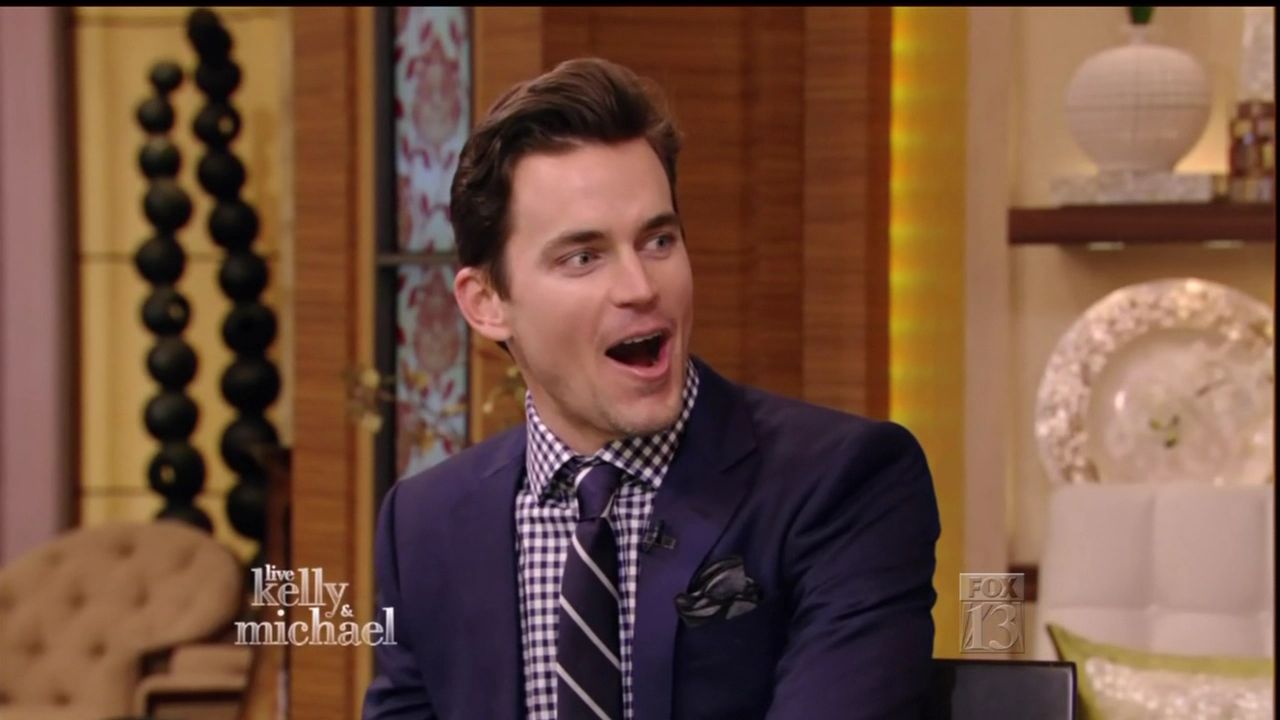
Matt visited earlier today Live with Kelly and Michael, as part of The Nice Guys promotion. Watch the video!

The current issue of V Magazine published an interview with Jack Kilmer (son of actor Val Kilmer) made by Matt Bomer. Jack and Matt will be appearing next on 70s crime caper The Nice Guys, and Matt has nothing but great thinks to say about the kid:
I love the film, and his performance in it is so incredibly natural and unforced. He’s open and charming. I’m massively jealous because there are actors who train their entire life to get the kind of naturalistic performance he gave in that film. The fact that it was his first acting job is really incredible.
On this interview, he talks with Bomer about finding passion in the last place he ever thought: the family business.
[nifty_toggle title=”Read the interview” start=”closed”]MATT BOMER How did you go from being a carefree music- and art-loving teenager to a film star?
JACK KILMER How I got into acting was through my friend Gia [Coppola], who cast me in Palo Alto. I’d never studied acting before, but both my parents [Val Kilmer and Joanne Whalley] are actors, so I was used to the schedule. This curiosity and this enthusiasm was born from Palo Alto. I’m so lucky; a lot of people don’t get to do what they want to do.
MB You fell in love with it from the experience of it. Almost an inside-out kind of way.
JK And it’s really helped me understand what my parents have been doing their whole lives. When you grow up you always wonder why people devote themselves to things. I’m starting to understand what my parents have been obsessing over.
MB It’s going to be a rite of passage for you, initially, that people ask you about your parents because they’re both really fantastic artists. Do you feel like your upbringing was pretty removed from the business, and kind of standard, all things considered?
JK Both of my parents live in their own bubble of…they live in their own world. For example, when my mom or my dad takes on a role, they’ll spend a lot of time doing research—character research, if you will—hours reading, sometimes late into the night. There’s no real time limit; you never know when inspiration’s going to hit you, you know what I mean? It was difficult as a kid to understand that my parents were working when they were at home studying for a role. But they really are. You’re working all the time when you’re preparing for a role, I think. Even when you go out with friends, it’s in the back of your mind.
MB And do they offer you counsel in terms of your career?
JK Their guidance is more concerning etiquette, or the manners that you should have on-set. They know I learn best on my own—I was always kind of quiet in class, at school. I wasn’t, like, participating in the group discussion. But, yeah, they’ve given me great advice. They want me to not be so concerned with fame and success, and to just focus on making captivating art.
MB You know, there’s so many films and shows that I’ve been a part of that are not age-appropriate for my kids. I used to feel guilty about it, and then I had a great actor tell me that my kids will ultimately respect me more when they grow up if they knew that I was choosing projects that I was passionate about. Was there a great deal of transparency about that in your home?
JK I remember seeing a bit of this movie on TV that my mom was in when I was a kid, this London Cockney-thug kind of film. My mom was slapped, and I remember being so horrified at seeing that. That was an early thing I had to get my head around—that it’s fake. How old are your kids, may I ask?
MB My oldest is 10, and then I have twin seven-year-olds as well. And they’re all boys. So they’re very curious. They like to watch me go over my lines and ask questions.
JK And I guess there’s a whole other conversation that, if you’re in the public [eye], you have to have with your kids. When someone at school says to one of your sons, “I saw your dad on TV, doing something or other…”
MB Yep, I’ve definitely had that one; that one has begun. You remember seeing the marketing as well. You remember seeing your parents on a billboard.
JK Well, my mom is from Manchester, England. She’s a very working-class woman. She always approached the press very coolly, and very businesslike. She says, “That’s what I do. That’s work. And when I’m at home, this is my place where I relax.” My dad actually had a bit more fun with it. He and his friends would come up with fun ideas to promote films. He did this one movie called
Wonderland, and he created this entire installation and then he put that on tour with the press. For the film, he took this massive art installation to Japan with him.
MB Alright, now I want to talk about you. One of your films that I really enjoyed is The Stanford Prison Experiment. I know that was a project that was gestating for a really long time, so it was nice to see it come together at the right time, with this amazing cast.
JK I’ll tell you about the first day of the shoot. I’d never met any of the cast before, and you know how you think, Who are these people I’m about to spend the next 10 weeks with—in a prison cell? But I ended up making these awesome friends. I mean, for Palo Alto I worked with a lot of young people as well, but a lot of them were nonactors. I mean, I learned so much from Emma Roberts, and Nat [Wolff], but Stanford was like…I kind of found this group of kids that were as weird as I am. The weirdness that went on behind the camera really added some great on-screen camaraderie.
MB It’s palpable. Was it an intense set? Were people staying in character between set-ups?
JK Everyone definitely had their role in the prison. As I would imagine you would in like, San Quentin. We were actually in a blank room with each other for a month straight. We were literally chained—our ankles were chained. It kind of drove everyone a bit mad.
MB Did working with these actors affect the way you dive into a role?
JK Yeah. I was actually talking about this with a friend the other day, about Ezra [Miller], and how he can walk—roll—up to a film set. When he’s not in character, he’s his own person, such an individual, and then he can completely stop. He’d have these crystals and wear these big headphones and just be in his own crazy world and then as soon as he had to get into character, he’d just snap his fingers and become this completely different person. It inspired me to make my own process because his is so radical.
MB It is such a gypsy lifestyle, being a working actor. You know, you travel from set to set, and you have to really drop your guard, and make yourself available to these people that, at the time, you don’t really know that well. And then you work really intimately with them, and then you have to move on to the next thing. So, sometimes it’s hard to make friends in that process—substantial friendships—that last outside of that.
JK What was it like for you as a young—I mean, you’re still young…
MB No, I’m not.
JK You’re not? You look…
MB No [laughs]. I remember at one point I was working with an actress who was quite young, but had already been around the world multiple times as an actor. And I remember complaining to her that I was never home. She said to me, “Listen, the career you signed up for is a gypsy lifestyle. It is not going to change. So you can complain about it, or you can embrace it. It’s one of the two.” And from that point on, my mindset really changed, and I was able to make peace with having to be away from home for long stretches of time, and also just to give myself the creative space I needed—like you said—to have the character in the back of my head at all times, even when I’m sitting with my family, or out with friends. Because like you said, you never know when inspiration is going to strike. I want to talk to you about The Nice Guys, where you play this great character, Chet, who’s really integral to the plot of the movie. And I think we filmed our scene together at about three o’clock in the morning, but I remember how you were so composed and relaxed and prepared. So much of the film work you’d done up until then was independent films, and now you’re on the set of a movie where I saw more people at craft services and video village than I saw on the entire set of some indies that I’ve done.
JK Well, I’ll tell you, I’d been in a hotel room for like a week and a half in Atlanta before we met. On the night that we met, it was a scene where something really crazy happens to my character and I’ve never done this crazy thing before in any facet. And the film set is massive. There’s a new DP everywhere I look. Anyway, I was just thinking about my lines, thinking about staying focused, but there was a darkness—I had to do something pretty dark that night and so I was just thinking about the dark side. Weirdly enough, even though it’s a big film set, it shrinks pretty fast. Once you just talk to anybody, anyone, and you realize you’re on planet Earth, everything is okay. It was overwhelming at first, and then you were really nice to me and that helped me relax.
MB When you’re working with a talented filmmaker, you’re able to shrink that big world down. I think Shane Black did a good job of that on [The Nice Guys]. One of the reasons I wanted to work with him was the film Kiss Kiss Bang Bang, which is one of my all-time favorites. As a gay man, Gay Perry [played by Val Kilmer] was one of the all-time great film characters for me. Did you get to meet Shane at that time?
JK When I met Shane I might’ve been 10 years old. What I do remember from that movie is my dad having these meetings…the preparation for that role was so much fun for him. There’s gonna be some really funny moments in Nice Guys, and Shane has a lot to do with that.
MB Oh my god. I had never laughed aloud as much as when I read that script.
JK I love detective stories a lot. Working with Russell Crowe after watching L.A. Confidential was like a dream. That’s one of my favorite movies.
MB So, now you’re an indie darling, you’re working on big studio movies, and you’re a fashion icon. You were just named one of Toronto Film Festival’s Most Stylish Men, and I personally think Hedi Slimane is a genius.
JK He’s a really sweet dude, really nice and kind. When you first meet him he doesn’t really talk that much. But we just had this conversation about music, and at the time he was working on this line for Saint Laurent called Psych Rock. We bonded over our interest in psych rock. Then he invited me to walk in the show and be a part of the campaign. It was wild—it was great. I met a lot of like-minded people through that. He hired a lot of musicians to walk in the show.
MB I understand music is a really big influence in your life. Do you want to perform as a musician some day?
JK Yeah, I do. I have some musical projects that are always going. I’ll kind of drop them and pick them back up, but I’m always playing. I just want to write the best possible songs I can write, and then later I’ll think about sharing it with people. It’s actually helped me with acting a lot. I like a lot of musicians that tell stories, like Tom Waits or Bob Dylan.
MB Do you ever create playlists for your characters? I do.
JK Yeah, hell yeah. That’s cool that you do that, too.
MB Who are the bands that really inspire you?
JK I listened to a lot of Lightnin’ Hopkins and Rolling Stones growing up. All of that revolution stuff. I sort of branched out from there and discovered bands like My Bloody Valentine. Nine Inch Nails was a big one for me.
MB I was at the Golden Globes last year, and it’s a, you know, pretty star-studded affair. I was doing fine and then I saw Trent Reznor. I mean, he must’ve been like, How did one of my stalkers get on the carpet? Because I think I just stopped and stared and he was like, Hey man, what’s up? I couldn’t even speak. We didn’t even converse, obviously, because he realized very quickly that I was a freak and he should go the other way. I wanted to ask: you skate, too, right?
JK Yeah, but in skateboarding if you don’t skate for a month, you lose the muscle.
MB I grew up skating in the suburbs and it was just such a great way to escape. It was mostly just ollying up curbs, and finding a place where we could smoke a cigarette away from everybody. I loved it. Do you have any curiosity about going to college?
JK Absolutely. It’s a strange time to do that, though. I think a lot of young adults who are undeclared are finding out these days that college is harder to navigate than it was for our parents’ generation, especially if you’re involved with the arts. For example: Say you get a B.A. in Visual Arts. You’re kind of limited to what you can do with that degree. But it really just depends on how you work, how you learn…I’d like to do another history class, biology, physics, math. All the things that I didn’t think were as important growing up are seeming really cool to me. Now I’m thinking, Wow, physics…that’s really trippy.
MB Listen, I’m a huge fan and I can’t wait to see all the many things you’re going to bring to us as an artist over the years. Count me in.
JK Ah, Matt, it’s really been a pleasure.[/nifty_toggle]